
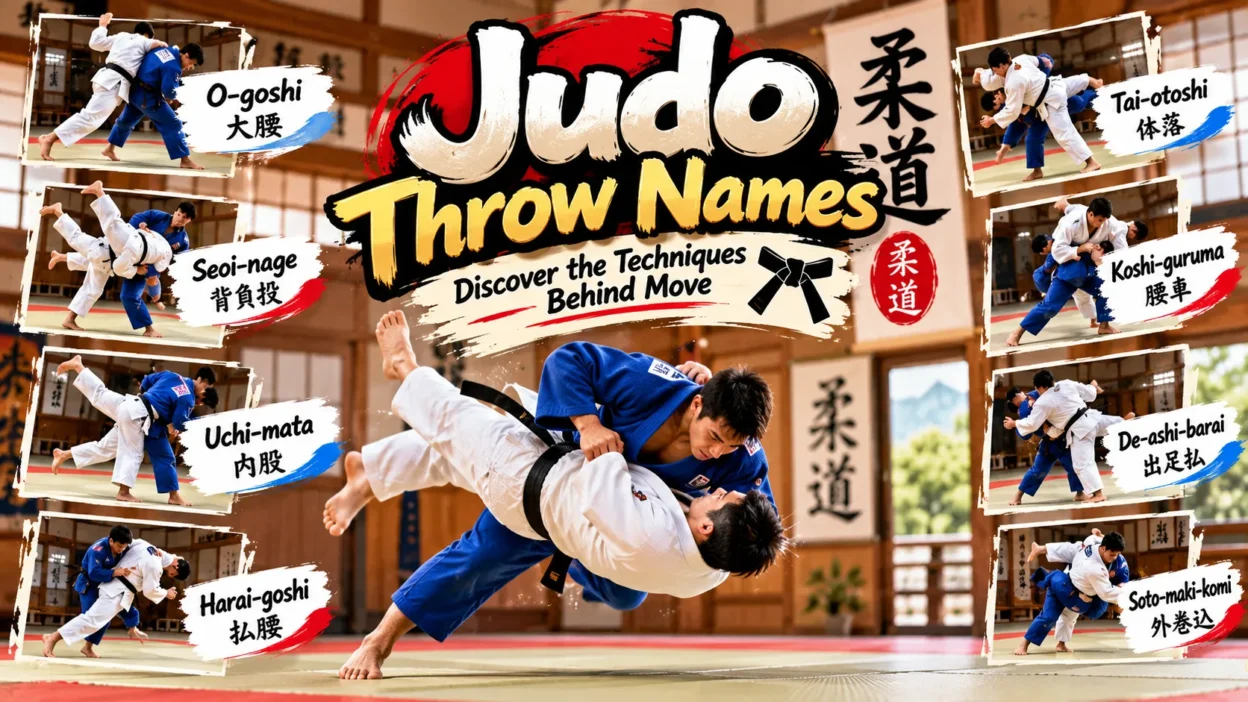
Judo throw names reveal the fascinating combination of balance, timing, movement, and technique behind this Japanese martial art. Whether you’re a beginner stepping onto the tatami for the first time or a martial arts enthusiast exploring traditional techniques, learning these names helps you understand how judo works. From famous hip throws to fast foot sweeps, each technique has its own purpose and character. Many names come from Japanese words that describe the direction, body part, or movement involved in the throw. As a result, understanding the terminology can make training sessions easier and more enjoyable.
Finding the right judo technique names can also help you follow competitions, study instructional videos, and communicate with training partners. Some throws focus on using the hips to lift and rotate an opponent. Others rely on footwork, hand control, or carefully timed movements. In this guide, you’ll discover traditional Japanese judo terminology, well-known throwing techniques, and useful variations organized into easy-to-explore categories. You’ll also learn how common names differ from their English translations. Although the list includes many established techniques and descriptive learning labels, not every variation represents an officially recognized Kodokan technique. Use this collection as a starting point for understanding judo vocabulary, discovering unfamiliar throws, and building a stronger foundation in martial arts.
🥋 Which Judo Throws Should Beginners Learn First?
Beginners usually start with basic throwing techniques that teach balance, movement, and safe falling.
Popular choices include Osoto Gari, O Goshi, De Ashi Harai, and Ippon Seoi Nage.
These techniques introduce leg sweeps, hip rotation, and shoulder-based throwing movements.
Practice them under a qualified instructor, with proper breakfall training and suitable supervision.
🥋 Classic Judo Throw Names Every Martial Artist Should Recognize
Classic judo throws form the foundation of traditional Japanese throwing techniques. These familiar names help students recognize movements during training and competition.
- Osoto Gari
- Ouchi Gari
- Kouchi Gari
- De Ashi Harai
- Okuri Ashi Harai
- Harai Tsurikomi Ashi
- Sasae Tsurikomi Ashi
- Hiza Guruma
- Ashi Guruma
- O Guruma
- Uchi Mata
- Hane Goshi
- Harai Goshi
- O Goshi
- Uki Goshi
- Koshi Guruma
- Tsuri Goshi
- Tsurikomi Goshi
- Ushiro Goshi
- Utsuri Goshi
- Ippon Seoi Nage
- Morote Seoi Nage
- Eri Seoi Nage
- Tai Otoshi
- Uki Otoshi
- Sumi Otoshi
- Yama Arashi
- Tomoe Nage
- Sumi Gaeshi
- Hikikomi Gaeshi
- Tawara Gaeshi
- Ura Nage
- Yoko Otoshi
- Tani Otoshi
- Yoko Gake
- Yoko Guruma
- Yoko Wakare
- Uki Waza
- Yoko Tomoe Nage
- Obi Otoshi
💥 Powerful Judo Throw Names for Impressive Techniques
Some throws stand out because they combine strong positioning with explosive movement. Their names are particularly useful when studying advanced demonstrations and competition highlights.
- Harai Goshi
- Uchi Mata
- O Guruma
- Ashi Guruma
- Koshi Guruma
- Tsuri Goshi
- Ushiro Goshi
- Utsuri Goshi
- Hane Goshi
- O Goshi
- Sode Tsurikomi Goshi
- Tsurikomi Goshi
- Uki Goshi
- Obi Otoshi
- Seoi Otoshi
- Kata Guruma
- Sukui Nage
- Kuchiki Taoshi
- Kibisu Gaeshi
- Kouchi Gaeshi
- Ouchi Gaeshi
- Osoto Gaeshi
- Uchi Mata Gaeshi
- Harai Goshi Gaeshi
- Hane Goshi Gaeshi
- Tsubame Gaeshi
- De Ashi Harai Gaeshi
- Hiza Guruma Gaeshi
- Sasae Tsurikomi Ashi Gaeshi
- Ko Soto Gake
- O Soto Guruma
- O Soto Otoshi
- O Soto Gari
- O Uchi Gari
- Ko Uchi Gari
- Ko Soto Gari
- O Guruma Gaeshi
- Uchi Mata Sukashi
- Uchi Mata Makikomi
- Harai Makikomi
🦵 Judo Foot Sweep Names for Speed and Precision
Foot sweeps depend on timing, movement, and coordination rather than brute strength alone. Learning these names helps students distinguish several important ashi-waza techniques.
- De Ashi Harai
- Okuri Ashi Harai
- Harai Tsurikomi Ashi
- Sasae Tsurikomi Ashi
- Hiza Guruma
- Ashi Guruma
- O Guruma
- Kosoto Gari
- Kosoto Gake
- Kouchi Gari
- Ouchi Gari
- Osoto Gari
- Osoto Guruma
- Osoto Otoshi
- Tsubame Gaeshi
- Kouchi Gaeshi
- Ouchi Gaeshi
- Osoto Gaeshi
- De Ashi Harai Gaeshi
- Hiza Guruma Gaeshi
- Sasae Tsurikomi Ashi Gaeshi
- Okuri Ashi Harai Gaeshi
- Harai Tsurikomi Ashi Gaeshi
- Uchi Mata
- Uchi Mata Sukashi
- Uchi Mata Gaeshi
- Uchi Mata Makikomi
- Ashi Guruma Gaeshi
- Kosoto Gake Gaeshi
- Kosoto Gari Gaeshi
- O Guruma Gaeshi
- Kani Basami
- Kawazu Gake
- Tani Otoshi
- Yoko Gake
- Yoko Guruma
- Yoko Otoshi
- Uki Waza
- Sumi Otoshi
- O Soto Gari
🌀 Judo Hip Throw Names for Smooth Body Movement
Hip throws use body positioning and rotation to create an effective throwing opportunity. These names are helpful when studying koshi-waza, the hip-throwing category.
- O Goshi
- Uki Goshi
- Koshi Guruma
- Harai Goshi
- Hane Goshi
- Tsuri Goshi
- Tsurikomi Goshi
- Ushiro Goshi
- Utsuri Goshi
- Sode Tsurikomi Goshi
- O Guruma
- Ashi Guruma
- Hane Makikomi
- Harai Makikomi
- Uchi Mata
- Uchi Mata Makikomi
- Koshi Guruma Makikomi
- O Goshi Makikomi
- Harai Goshi Gaeshi
- Hane Goshi Gaeshi
- Uki Goshi Gaeshi
- Tsuri Goshi Gaeshi
- Tsurikomi Goshi Gaeshi
- Ushiro Goshi Gaeshi
- Utsuri Goshi Gaeshi
- Daki Age
- Obi Otoshi
- Kata Guruma
- Sukui Nage
- Te Guruma
- Kuchiki Taoshi
- Kibisu Gaeshi
- Sumi Gaeshi
- Hikikomi Gaeshi
- Tawara Gaeshi
- Ura Nage
- Yoko Guruma
- Yoko Otoshi
- Yoko Wakare
- Uki Otoshi
🤼 Judo Shoulder Throw Names for Competitive Training
Shoulder throws are a recognizable part of judo. They teach students how grip control, body rotation, and coordinated movement contribute to a successful technique.
- Ippon Seoi Nage
- Morote Seoi Nage
- Eri Seoi Nage
- Seoi Otoshi
- Seoi Makikomi
- Kata Guruma
- Yama Arashi
- Tai Otoshi
- Sukui Nage
- Te Guruma
- Obi Otoshi
- Kuchiki Taoshi
- Kibisu Gaeshi
- Kouchi Gaeshi
- Ouchi Gaeshi
- Osoto Gaeshi
- Uchi Mata Gaeshi
- Harai Goshi Gaeshi
- Hane Goshi Gaeshi
- Tsubame Gaeshi
- Uchi Mata Sukashi
- De Ashi Harai
- Okuri Ashi Harai
- Sasae Tsurikomi Ashi
- Hiza Guruma
- Ashi Guruma
- O Guruma
- O Soto Gari
- Ouchi Gari
- Kouchi Gari
- Kosoto Gari
- Kosoto Gake
- Uki Otoshi
- Sumi Otoshi
- Yoko Otoshi
- Tani Otoshi
- Ura Nage
- Sumi Gaeshi
- Tomoe Nage
- Yoko Tomoe Nage
🌪️ Judo Sacrifice Throw Names That Use Momentum
Sacrifice throws involve deliberately lowering or dropping the body to create a throwing opportunity. These techniques require careful instruction because poor timing can cause injury.
- Tomoe Nage
- Yoko Tomoe Nage
- Sumi Gaeshi
- Hikikomi Gaeshi
- Tawara Gaeshi
- Ura Nage
- Uki Waza
- Yoko Otoshi
- Tani Otoshi
- Yoko Gake
- Yoko Guruma
- Yoko Wakare
- Obi Otoshi
- Seoi Otoshi
- Sumi Otoshi
- Uki Otoshi
- Daki Age
- Yoko Gake Gaeshi
- Yoko Guruma Gaeshi
- Yoko Otoshi Gaeshi
- Tani Otoshi Gaeshi
- Tomoe Nage Gaeshi
- Sumi Gaeshi Variation
- Hikikomi Gaeshi Variation
- Ura Nage Variation
- Uki Waza Variation
- Yoko Tomoe Variation
- Tawara Gaeshi Variation
- Yoko Wakare Variation
- Yoko Sutemi Waza
- Mae Sutemi Waza
- Yoko Sutemi Technique
- Rear Sacrifice Throw
- Side Sacrifice Throw
- Front Sacrifice Throw
- Rolling Sacrifice Throw
- Circular Sacrifice Throw
- Floating Sacrifice Throw
- Valley Drop Variation
- Side Drop Variation
Note: Some entries above are descriptive labels or variations rather than separate official Kodokan technique names.
🇯🇵 Traditional Japanese Judo Throw Names and Meanings
Japanese terminology often describes the action or body part involved in a technique. Understanding these common words makes traditional judo vocabulary easier to remember.
- Osoto Gari
- Ouchi Gari
- Kouchi Gari
- Kosoto Gari
- Kosoto Gake
- De Ashi Harai
- Okuri Ashi Harai
- Hiza Guruma
- Sasae Tsurikomi Ashi
- Harai Tsurikomi Ashi
- Ashi Guruma
- O Guruma
- Uchi Mata
- Harai Goshi
- Hane Goshi
- O Goshi
- Uki Goshi
- Koshi Guruma
- Tsuri Goshi
- Tsurikomi Goshi
- Ushiro Goshi
- Utsuri Goshi
- Ippon Seoi Nage
- Morote Seoi Nage
- Eri Seoi Nage
- Tai Otoshi
- Uki Otoshi
- Sumi Otoshi
- Kata Guruma
- Yama Arashi
- Tomoe Nage
- Sumi Gaeshi
- Hikikomi Gaeshi
- Tawara Gaeshi
- Ura Nage
- Yoko Otoshi
- Tani Otoshi
- Yoko Gake
- Yoko Guruma
- Uki Waza
🏆 Famous Judo Throw Names Seen in Competitions
Competitive judo showcases techniques that reward accurate timing, strong positioning, and quick reactions. These names are useful when following tournaments or reviewing match footage.
- Uchi Mata
- Harai Goshi
- Osoto Gari
- Ouchi Gari
- Kouchi Gari
- De Ashi Harai
- Okuri Ashi Harai
- Sasae Tsurikomi Ashi
- Hiza Guruma
- Ippon Seoi Nage
- Morote Seoi Nage
- Tai Otoshi
- Kata Guruma
- Sode Tsurikomi Goshi
- Hane Goshi
- O Goshi
- Koshi Guruma
- Tomoe Nage
- Yoko Tomoe Nage
- Sumi Gaeshi
- Ura Nage
- Tani Otoshi
- Yoko Otoshi
- Yoko Guruma
- Uki Waza
- Sumi Otoshi
- Uki Otoshi
- Sukui Nage
- Te Guruma
- Kuchiki Taoshi
- Kibisu Gaeshi
- Tsubame Gaeshi
- Uchi Mata Sukashi
- Uchi Mata Gaeshi
- Osoto Gaeshi
- Ouchi Gaeshi
- Kouchi Gaeshi
- Harai Goshi Gaeshi
- Hane Goshi Gaeshi
- Seoi Otoshi
🧠 Judo Throw Names for Beginners Learning the Basics
New students benefit from learning a manageable group of techniques before exploring advanced variations. These names provide a useful vocabulary list for early practice.
- O Goshi
- Uki Goshi
- De Ashi Harai
- Osoto Gari
- Ouchi Gari
- Kouchi Gari
- Kosoto Gari
- Hiza Guruma
- Sasae Tsurikomi Ashi
- Okuri Ashi Harai
- Harai Tsurikomi Ashi
- Ippon Seoi Nage
- Morote Seoi Nage
- Tai Otoshi
- Koshi Guruma
- Harai Goshi
- Uchi Mata
- Hane Goshi
- Ashi Guruma
- O Guruma
- Tsuri Goshi
- Tsurikomi Goshi
- Uki Otoshi
- Sumi Otoshi
- Tomoe Nage
- Sumi Gaeshi
- Tani Otoshi
- Yoko Otoshi
- Ura Nage
- Kata Guruma
- Seoi Otoshi
- Sukui Nage
- Obi Otoshi
- Yoko Gake
- Yoko Guruma
- Uki Waza
- Yoko Wakare
- Hikikomi Gaeshi
- Tawara Gaeshi
- Utsuri Goshi
🔥 Advanced Judo Throw Names for Experienced Practitioners
Experienced judoka often explore combinations, counters, and specialized techniques as their understanding improves. These names can guide further study with a qualified instructor.
- Uchi Mata Sukashi
- Uchi Mata Gaeshi
- Uchi Mata Makikomi
- Harai Goshi Gaeshi
- Hane Goshi Gaeshi
- Osoto Gaeshi
- Ouchi Gaeshi
- Kouchi Gaeshi
- Tsubame Gaeshi
- De Ashi Harai Gaeshi
- Hiza Guruma Gaeshi
- Sasae Tsurikomi Ashi Gaeshi
- Okuri Ashi Harai Gaeshi
- O Guruma Gaeshi
- Kosoto Gari Gaeshi
- Kosoto Gake Gaeshi
- Harai Makikomi
- Hane Makikomi
- Soto Makikomi
- Uchi Makikomi
- Kani Basami
- Kawazu Gake
- Yama Arashi
- Te Guruma
- Sukui Nage
- Kata Guruma
- Ura Nage
- Tawara Gaeshi
- Hikikomi Gaeshi
- Sumi Gaeshi
- Yoko Tomoe Nage
- Uki Waza
- Yoko Wakare
- Yoko Guruma
- Tani Otoshi
- Yoko Gake
- Obi Otoshi
- Kuchiki Taoshi
- Kibisu Gaeshi
- Daki Age
Some listed techniques are restricted or prohibited in particular judo competition rules. Learn their status before attempting them.
🎯 Judo Throw Names Organized by Technique Category
Judo divides throwing techniques into categories based on how the throw uses the body. This classification makes it easier to organize terminology and understand the purpose of different movements.
- Te Waza
- Koshi Waza
- Ashi Waza
- Ma Sutemi Waza
- Yoko Sutemi Waza
- Seoi Nage
- Tai Otoshi
- Kata Guruma
- Sukui Nage
- Te Guruma
- Obi Otoshi
- Uki Otoshi
- Sumi Otoshi
- O Goshi
- Uki Goshi
- Harai Goshi
- Hane Goshi
- Koshi Guruma
- Tsuri Goshi
- Tsurikomi Goshi
- Utsuri Goshi
- Ushiro Goshi
- De Ashi Harai
- Okuri Ashi Harai
- Hiza Guruma
- Sasae Tsurikomi Ashi
- Ashi Guruma
- O Guruma
- Uchi Mata
- Osoto Gari
- Ouchi Gari
- Kouchi Gari
- Kosoto Gari
- Kosoto Gake
- Tomoe Nage
- Sumi Gaeshi
- Ura Nage
- Tani Otoshi
- Yoko Otoshi
- Uki Waza
⚡ Judo Throw Combination Names for Fluid Movement
Combinations connect techniques when an opponent reacts to an initial attack. Learning the terminology helps judoka discuss transitions and tactical choices during practice.
- Osoto Gari to Ouchi Gari
- Ouchi Gari to Kouchi Gari
- Kouchi Gari to Osoto Gari
- De Ashi Harai to Osoto Gari
- De Ashi Harai to Uchi Mata
- Ouchi Gari to Uchi Mata
- Kouchi Gari to Uchi Mata
- Osoto Gari to Harai Goshi
- Osoto Gari to Tai Otoshi
- Ouchi Gari to Seoi Nage
- Kouchi Gari to Seoi Nage
- De Ashi Harai to Tai Otoshi
- Sasae Tsurikomi Ashi to Seoi Nage
- Hiza Guruma to Osoto Gari
- Hiza Guruma to Uchi Mata
- Ouchi Gari to Harai Goshi
- Kouchi Gari to Harai Goshi
- Osoto Gari to O Goshi
- Uchi Mata to Osoto Gari
- Uchi Mata to Ouchi Gari
- Uchi Mata to Kouchi Gari
- Harai Goshi to Ouchi Gari
- Harai Goshi to Osoto Gari
- Seoi Nage to Kouchi Gari
- Seoi Nage to Ouchi Gari
- Tai Otoshi to Kouchi Gari
- Tai Otoshi to Ouchi Gari
- O Goshi to Osoto Gari
- Koshi Guruma to Ouchi Gari
- De Ashi Harai to Sasae Tsurikomi Ashi
- Ouchi Gari to Sumi Gaeshi
- Kouchi Gari to Sumi Gaeshi
- Osoto Gari to Tani Otoshi
- Uchi Mata to Sumi Gaeshi
- Harai Goshi to Tani Otoshi
- Seoi Nage to Tomoe Nage
- Ouchi Gari to Tomoe Nage
- Kouchi Gari to Tomoe Nage
- Osoto Gari to Ura Nage
- Tai Otoshi to Seoi Nage
These are descriptive combination ideas, not official names for separate Kodokan throws. Practice transitions with qualified supervision.
🌟 Judo Throw Names for Martial Arts Research and Study
Studying judo terminology helps students understand instruction, historical references, and technical demonstrations. This final collection brings together familiar names and selected specialist vocabulary for further exploration.
- Nage Waza
- Te Waza
- Koshi Waza
- Ashi Waza
- Sutemi Waza
- Ma Sutemi Waza
- Yoko Sutemi Waza
- Seoi Nage
- Ippon Seoi Nage
- Morote Seoi Nage
- Eri Seoi Nage
- Seoi Otoshi
- Tai Otoshi
- Kata Guruma
- Uki Otoshi
- Sumi Otoshi
- Sukui Nage
- Te Guruma
- Obi Otoshi
- Kuchiki Taoshi
- Kibisu Gaeshi
- O Goshi
- Uki Goshi
- Koshi Guruma
- Harai Goshi
- Hane Goshi
- Tsuri Goshi
- Tsurikomi Goshi
- Ushiro Goshi
- Utsuri Goshi
- De Ashi Harai
- Okuri Ashi Harai
- Sasae Tsurikomi Ashi
- Hiza Guruma
- Ashi Guruma
- O Guruma
- Uchi Mata
- Osoto Gari
- Ouchi Gari
- Tomoe Nage
📚 How Can You Learn Judo Throw Names More Easily?
Learning Japanese terminology becomes easier when you connect each name with its movement. Start with a few familiar throws, such as Osoto Gari, O Goshi, and Ippon Seoi Nage. Then learn the basic meaning of words like gari, harai, nage, and otoshi. These translations can help you remember the general action, although they do not explain every technical detail.
Next, watch demonstrations from reputable judo instructors and listen for the Japanese names. Write each term beside a short description of the movement. During class, ask your instructor to correct your pronunciation and explain the technique’s purpose. Most importantly, practice the movements slowly with a suitable partner. Learn breakfalls before attempting throws, and never test unfamiliar techniques without supervision.
🥋 How Do You Choose the Right Judo Throw to Practice?
The right throw depends on your experience, body movement, grip, and training goals. Beginners should focus on foundational techniques rather than trying to memorize every name at once. Your instructor can help you select movements that suit your current ability and build on skills you already understand.
For example, a student working on footwork may study De Ashi Harai. Someone learning hip positioning might focus on O Goshi. Shoulder throws introduce another set of coordination challenges. As your skills develop, you can explore combinations and counters. Competition rules also matter because some techniques carry restrictions or are prohibited in certain settings. Prioritize control, safe falling, and correct movement over speed or power.
🌏 Why Do Judo Throw Names Use Japanese Words?
Judo developed in Japan, so its traditional technical vocabulary uses Japanese terminology. These names help practitioners worldwide identify techniques consistently, even when they speak different languages. A student in the United States can hear the same name used by an instructor in Japan or another country.
Many terms describe the action involved in a throw. Gari generally refers to reaping, while harai refers to sweeping. Goshi relates to the hips, and nage means throwing. However, the English meaning alone cannot fully explain how a technique works. Learning both the name and its physical application provides a clearer understanding of judo’s technical language.
❓ Frequently Asked Questions About Judo Throw Names
🥋 What is the most famous judo throw?
Uchi Mata and Osoto Gari are among the best-known judo throws. Both appear in traditional instruction and competitive demonstrations.
The best technique for an individual depends on their movement, experience, and training situation.
🥋 How many official judo throwing techniques exist?
The Kodokan recognizes 68 nage-waza techniques in its established classification. These include hand techniques, hip techniques, foot and leg techniques, and sacrifice throws.
The total can differ across teaching systems when they include variations, combinations, or historical techniques.
🥋 What does Osoto Gari mean in judo?
Osoto Gari is commonly translated as “major outer reaping.” The name describes an outside reaping action used in the throw.
Students should learn the technique’s positioning and timing from a qualified instructor rather than relying on the translation alone.
🥋 Which judo throws are easiest for beginners?
O Goshi and De Ashi Harai are common introductory choices in many beginner programs. Osoto Gari is also widely taught.
However, the most suitable starting technique depends on the student’s balance, coordination, and instructor’s lesson plan.
🥋 What is the difference between a judo sweep and a throw?
A sweep often takes advantage of an opponent’s moving foot or leg. A throw is a broader category that includes techniques using the hips, hands, legs, or sacrifice movements.
In judo, foot sweeps are themselves recognized throwing techniques.
🥋 What does Nage Waza mean?
Nage Waza means throwing techniques in judo. It is the broad category that includes many familiar throws.
These techniques are commonly grouped into hand, hip, foot and leg, and sacrifice-throw categories.
🥋 Are all judo throws allowed in competitions?
No. Competition rules restrict certain techniques, and permitted actions may depend on the governing organization’s current regulations.
Always check the applicable rules and follow your instructor’s guidance before practicing unfamiliar or restricted techniques.
🥋 How can I memorize Japanese judo technique names?
Learn a few names at a time and connect each one to a demonstration. Reviewing the term during practice helps reinforce your memory.
You can also make flashcards with the Japanese name, its approximate English meaning, and a short description of the movement.
🏁 Conclusion
Learning judo throw names gives you a stronger foundation for understanding Japanese martial arts, following competitions, and communicating during training. From familiar techniques like Osoto Gari and O Goshi to sacrifice throws and advanced combinations, each name introduces a different part of judo’s technical vocabulary. Start with the basic throws, learn their meanings, and connect every term with a proper demonstration. Remember that memorizing names is only the first step. Consistent practice, qualified instruction, and safe falling skills matter far more than collecting a long list of techniques. With patience, these judo throw names will become easier to recognize and remember.

Zoe Collins is a creative writer and naming specialist with a passion for discovering unique and meaningful names. At Nameznest, she focuses on curating fresh ideas for pet names, gaming usernames, and creative naming inspiration.
With a strong eye for trends and creativity, Zoe makes it easy for readers to find the perfect name for any purpose. Her goal is to turn name searching into a fun, simple, and inspiring experience for everyone.