
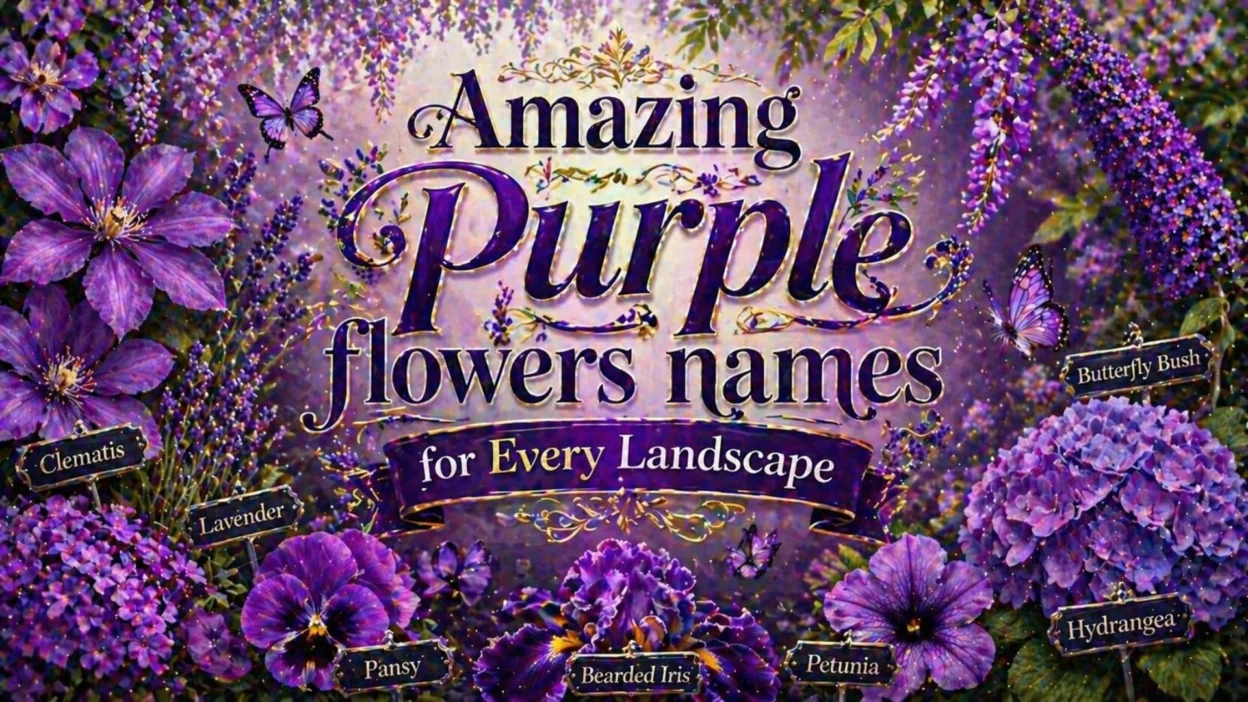
Purple flowers names are essential knowledge for any gardener looking to add royal elegance to their outdoor space. From deep violet to soft lavender, these blooms create stunning visual interest and attract beneficial pollinators like bees and butterflies. Whether you are designing a cutting garden or simply want to brighten a shady corner, purple flowers offer incredible versatility across all seasons.
The world of purple flowers names includes annuals, perennials, bulbs, and shrubs that thrive in various growing conditions. Many gardeners seek out these plants because purple symbolizes tranquility, creativity, and dignity. You can find options that bloom in spring, summer, or fall, ensuring your garden never lacks color. Some purple flowers also produce delightful fragrances that make evening walks more enjoyable. With proper care, these plants will reward you with months of breathtaking displays. Purple flowers also hold cultural significance in many traditions, representing royalty, spirituality, and luxury. Adding them to your landscape instantly elevates the overall design aesthetic.
What Makes Purple Flowers So Special in Gardens
Purple flowers stand out because they complement nearly every other color in the garden. They pair beautifully with yellow, white, pink, and orange blooms. Purple also creates a calming effect that reduces visual chaos in densely planted beds. Many butterflies and hummingbirds cannot resist purple flowers, making them excellent choices for wildlife gardens. The color purple ranges from pale lilac to nearly black, giving you endless design possibilities. Gardeners love purple because it adds depth and mystery to any planting scheme.
Purple Flowers Names for Spring Gardens
Spring brings some of the most beloved purple blooms after a long winter. These early risers chase away the gray and announce the arrival of warmer weather. You can plant these in borders, containers, or woodland gardens for maximum impact. Spring purple flowers often have shorter stems and smaller blooms than summer varieties. They make excellent companions for yellow daffodils and white tulips. Many spring purple flowers are bulbs that multiply over time.
- Crocus
- Grape Hyacinth
- Spring Crocus
- Dutch Iris
- Glory of the Snow
- Lenten Rose
- Periwinkle
- Virginia Bluebells
- Primrose
- Pansy
- Viola
- Johnny Jump Up
- Siberian Squill
- Striped Squill
- Spring Vetch
- Bluebell
- Hyacinth
- Tulip
- Daffodil
- Fritillaria
- Anemone
- Pulmonaria
- Brunnera
- Bergenia
- Aubrieta
- Rockcress
- Creeping Phlox
- Sweet Violet
- Dog Violet
- Hepatica
- Bloodroot
- Trillium
- Shooting Star
- Blue Eyed Mary
- Ground Ivy
- Bugleweed
- Lungwort
- Forget Me Not
- Bleeding Heart
- Dwarf Iris
- Glory of the Snow
- Checkered Lily
- Snake Head Fritillary
- Crown Imperial
- Glory Lily
Purple Flowers Names for Summer Gardens
Summer is the peak season for vibrant purple displays that last for months. These heat-loving plants thrive under the sun and keep blooming even during dry spells. Include these in perennial borders, cottage gardens, or cutting gardens. Summer purple flowers often have larger blooms and taller growth habits. They attract many butterflies, bees, and hummingbirds to your yard. Providing consistent water during summer heat ensures continuous blooming.
- Lavender
- Salvia
- Russian Sage
- Catmint
- Veronica
- Speedwell
- Liatris
- Blazing Star
- Echinacea
- Coneflower
- Aster
- Balloon Flower
- Bellflower
- Campanula
- Delphinium
- Larkspur
- Monkshood
- Aconitum
- Clematis
- Passion Flower
- Morning Glory
- Petunia
- Calibrachoa
- Million Bells
- Verbena
- Lantana
- Bougainvillea
- Plumbago
- Leadwort
- Hydrangea
- Butterfly Bush
- Buddleia
- Crape Myrtle
- Rose of Sharon
- Hibiscus
- Hollyhock
- Malva
- Mallow
- Thistle
- Globe Thistle
- Bee Balm
- Monarda
- Anise Hyssop
- Giant Hyssop
- Penstemon
- Beardtongue
- Phlox
- Garden Phlox
- Wild Petunia
- Ruellia
Purple Flowers Names for Fall Gardens
As summer fades, many purple flowers continue to shine well into autumn. These late bloomers provide essential nectar for migrating butterflies and bees. Plant these to extend your garden’s color until the first hard frost. Fall purple flowers are often tougher and more cold tolerant than summer varieties. They pair wonderfully with orange and yellow chrysanthemums and ornamental grasses. Many fall purple flowers also produce interesting seed heads for winter interest.
- Aster
- Chrysanthemum
- Toad Lily
- Tricyrtis
- Ironweed
- Vernonia
- Joe Pye Weed
- Eutrochium
- Sedum
- Stonecrop
- Autumn Crocus
- Colchicum
- Saffron Crocus
- Gentian
- Closed Gentian
- Bottle Gentian
- Turtlehead
- Chelone
- Monkshood
- Fall Aster
- New England Aster
- Smooth Aster
- Calico Aster
- Heath Aster
- Blue Mistflower
- Conoclinium
- Hardy Ageratum
- Mexican Bush Sage
- Salvia leucantha
- Autumn Sage
- Pincushion Flower
- Scabiosa
- Ornamental Kale
- Ornamental Cabbage
- Heuchera
- Coral Bells
- Liriope
- Monkey Grass
- Black Eyed Susan
- Rudbeckia
- Helenium
- Sneezeweed
- Goldenrod
- Solidago
- Tansy
- Bluebeard
- Caryopteris
Purple Flowers Names for Shade Gardens
Not all purple flowers demand full sun. Many thrive in shady spots under trees or on the north side of your home. These shade lovers bring color to dark corners where little else grows. Shade purple flowers often have larger leaves to capture available light. They prefer moist, rich soil with plenty of organic matter. Many of these plants are also excellent ground covers for difficult areas.
- Brunnera
- Siberian Bugloss
- Lungwort
- Pulmonaria
- Hosta
- Plantain Lily
- Coral Bells
- Heuchera
- Viola
- Sweet Violet
- Dog Violet
- Periwinkle
- Vinca Minor
- Creeping Myrtle
- Bugleweed
- Ajuga
- Dead Nettle
- Lamium
- Epimedium
- Barrenwort
- Foxglove
- Digitalis
- Columbine
- Aquilegia
- Jacob’s Ladder
- Polemonium
- Primrose
- Primula
- Lenten Rose
- Hellebore
- Bellflower
- Campanula
- Bluebells
- Mertensia
- Virginia Bluebells
- Trillium
- Wake Robin
- Solomon’s Seal
- Polygonatum
- Toad Lily
- Glory of the Snow
- Baneberry
- Actaea
- Bugbane
- Cimicifuga
- Goatsbeard
- Aruncus
Purple Flowers Names for Pollinator Gardens
Bees, butterflies, and hummingbirds cannot resist purple blooms. These flowers produce abundant nectar and pollen that support healthy pollinator populations. Create a buzzing haven with these wildlife favorites. Pollinator purple flowers should be planted in large drifts for maximum impact. Avoid using pesticides near these plants to protect visiting insects. Provide a water source nearby for thirsty butterflies and bees.
- Lavender
- Salvia
- Russian Sage
- Catmint
- Nepeta
- Bee Balm
- Monarda
- Butterfly Bush
- Buddleia
- Purple Coneflower
- Echinacea
- Liatris
- Blazing Star
- Verbena
- Ironweed
- Joe Pye Weed
- Aster
- Goldenrod
- Solidago
- Thistle
- Globe Thistle
- Eryngium
- Sea Holly
- Hyssop
- Agastache
- Anise Hyssop
- Giant Hyssop
- Penstemon
- Beardtongue
- Phlox
- Garden Phlox
- Wild Petunia
- Ruellia
- Geranium
- Cranesbill
- Borage
- Starflower
- Comfrey
- Symphytum
- Mallow
- Milkweed
- Butterfly Weed
- Asclepias
- Ironweed
- Vernonia
- Blue Mistflower
- Conoclinium
- Culver Root
- Veronicastrum
Purple Flowers Names for Cut Flower Gardens
Many purple flowers make excellent cut flowers for bouquets and floral arrangements. These varieties have long stems and lasting vase life. Grow your own supply of stunning purple blooms for fresh indoor displays. Cut flower purple varieties should be harvested early in the morning for longest vase life. Change the water every two days to keep arrangements fresh. Some purple flowers also dry beautifully for everlasting crafts.
- Lavender
- Delphinium
- Larkspur
- Aster
- Globe Thistle
- Sea Holly
- Liatris
- Blazing Star
- Stock
- Matthiola
- Lisianthus
- Eustoma
- Statice
- Limonium
- Wax Flower
- Chamelaucium
- Calla Lily
- Zantedeschia
- Iris
- Dutch Iris
- Allium
- Ornamental Onion
- Snapdragon
- Antirrhinum
- Foxglove
- Sweet Pea
- Lathyrus
- Bachelor Button
- Centaurea
- Cornflower
- Veronica
- Speedwell
- Campanula
- Balloon Flower
- Scabiosa
- Pincushion Flower
- Clematis
- Hydrangea
- Rose
- Lilac
- Syringa
- Peony
- Paeonia
- Anemone
- Ranunculus
- Fritillaria
- Queen Anne Lace
- Ammi
- Bupleurum
Purple Flowers Names for Containers and Hanging Baskets
Limited space does not mean giving up on purple flowers. These compact varieties thrive in pots, planters, and hanging baskets. Enjoy gorgeous purple blooms on patios, balconies, and small courtyards. Container purple flowers need more frequent watering than garden plants. Use high quality potting mix with slow release fertilizer. Trailing varieties look spectacular spilling over the edges of baskets.
- Petunia
- Calibrachoa
- Million Bells
- Verbena
- Lantana
- Bacopa
- Sutera
- Lobelia
- Trailing Lobelia
- Pansy
- Viola
- Johnny Jump Up
- Alyssum
- Sweet Alyssum
- Heliotrope
- Cherry Pie Plant
- Fuchsia
- Bougainvillea
- Mandevilla
- Dipladenia
- Scaevola
- Fan Flower
- Browallia
- Bush Violet
- Torenia
- Wishbone Flower
- Nemesia
- Cape Jewels
- Osteospermum
- African Daisy
- Argyranthemum
- Geranium
- Pelargonium
- Ivy Geranium
- Portulaca
- Moss Rose
- Angelonia
- Summer Snapdragon
- Supertunia
- Wave Petunia
- Surfinia
- Trailing Petunia
- Million Bells
- Superbells
- Callibrchoa
- Diascia
- Twinspur
- Bacopa
- Snowstorm
Purple Flowers Names for Dried Arrangements
Some purple flowers retain their color and shape after drying. These are perfect for everlasting wreaths, dried bouquets, and craft projects. Preserve the beauty of your garden for months or even years. Dried purple flowers should be harvested just before full bloom. Hang them upside down in a dark, dry, well ventilated space for best results. Once dried, they will last for many months without fading significantly.
- Lavender
- Statice
- Sea Holly
- Globe Thistle
- Craspedia
- Billy Buttons
- Xeranthemum
- Immortal Flower
- Ammobium
- Winged Everlasting
- Rhodanthe
- Strawflower
- Helichrysum
- Acroclinium
- Gomphrena
- Globe Amaranth
- Celosia
- Cockscomb
- Bachelor Button
- Centaurea
- Larkspur
- Delphinium
- Liatris
- Allium
- Honesty
- Lunaria
- Money Plant
- Moluccella
- Bells of Ireland
- Eryngium
- Hydrangea
- Panicled Hydrangea
- Peony
- Paeonia
- Rose
- Chinese Lantern
- Physalis
- Love in a Puff
- Nigella
- Love in a Mist
- Ammi
- Bishop Flower
- Blue Lace Flower
- Trachymene
- Queen Anne Lace
- Daucus
- Yarrow
- Achillea
- Sage
- Salvia
Purple Flowers Names for Ground Cover
Cover bare soil and suppress weeds with these low growing purple flowers. These spreading plants create beautiful carpets of color. They are perfect for slopes, pathways, and underplanting shrubs. Ground cover purple flowers are often drought tolerant once established. They spread by runners or self seeding to fill empty spaces. Many also tolerate moderate foot traffic.
- Creeping Phlox
- Moss Phlox
- Bugleweed
- Ajuga
- Periwinkle
- Vinca Minor
- Creeping Myrtle
- Sweet Violet
- Dog Violet
- Dead Nettle
- Lamium
- Veronica
- Speedwell
- Creeping Speedwell
- Thyme
- Creeping Thyme
- Mother of Thyme
- Sedum
- Stonecrop
- Creeping Sedum
- Lithodora
- Purple Gromwell
- Aubrieta
- Rockcress
- Alyssum
- Basket of Gold
- Campanula
- Bellflower
- Creeping Bellflower
- Plumbago
- Leadwort
- Ceratostigma
- Hardy Plumbago
- Liriope
- Monkey Grass
- Mondo Grass
- Ophiopogon
- Black Mondo Grass
- Viola Labradorica
- Alpine Violet
- Prairie Violet
- Pratia
- Laurentia
- Blue Star Creeper
- Isotoma
- Solenopsis
- Lobelia pedunculata
Purple Flowers Names for Fragrance
Some purple flowers produce intoxicating scents that fill the air. These aromatic blooms are perfect near windows, patios, and entryways. Enjoy natural perfume from your garden all season long. Fragrant purple flowers are most potent in the evening hours. Plant them where you can enjoy their scent up close. Some varieties have been bred specifically for their strong, sweet perfume.
- Lavender
- English Lavender
- French Lavender
- Spanish Lavender
- Lilac
- Common Lilac
- Hyacinth
- Grape Hyacinth
- Sweet Violet
- Heliotrope
- Cherry Pie Plant
- Stock
- Matthiola
- Evening Stock
- Night Scented Stock
- Nicotiana
- Flowering Tobacco
- Jasmine
- Night Blooming Jasmine
- Petunia
- Wave Petunia
- Garden Petunia
- Rose
- Hybrid Tea Rose
- Floribunda Rose
- Climbing Rose
- Clematis
- Sweet Autumn Clematis
- Honeysuckle
- Lonicera
- Wisteria
- Chinese Wisteria
- Japanese Wisteria
- Phlox
- Garden Phlox
- Summer Phlox
- Dianthus
- Carnation
- Sweet William
- Pinks
- Bee Balm
- Monarda
- Gardenia
- Osmorhiza
- Sweet Cicely
- Valerian
- Garden Valerian
Tips for Growing Healthy Purple Flowers
Most purple flowers prefer full sun to partial shade and well draining soil. Before planting, test your soil pH because many purple blooms thrive in slightly acidic to neutral conditions. Add compost or organic matter to improve drainage and fertility. Water deeply but infrequently to encourage strong root systems. Mulch around plants to retain moisture and suppress weeds. Deadhead spent blooms regularly to promote continuous flowering. Fertilize with a balanced, slow release product in early spring. Watch for common pests like aphids, spider mites, and Japanese beetles. Treat infestations early with insecticidal soap or neem oil. Divide overcrowded perennials every three to four years to maintain vigor. Some purple flowers benefit from staking to keep tall stems upright. Cut back foliage after flowering to encourage fresh growth.
How to Design with Purple Flowers in Your Landscape
Start by choosing a color scheme that complements your home and existing plants. Purple pairs wonderfully with yellow, white, pink, and silver foliage. Plant taller purple flowers like delphinium and liatris toward the back of borders. Use medium height plants such as salvia and lavender in the middle. Place low growers like viola and creeping phlox along edges and pathways. Create repetition by using the same purple flower in multiple spots throughout your garden. Add contrast with chartreuse or burgundy foliage plants. Consider bloom times so you always have something purple flowering. Group plants with similar water and sun needs together for easier maintenance. Leave some seed heads standing in fall for winter interest and bird food. Use purple flowers to create focal points that draw the eye through your garden. Combine different shades of purple for a monochromatic design that feels cohesive and calming.
Common Problems When Growing Purple Flowers
Overwatering is the most common mistake gardeners make with purple flowers. Many purple varieties prefer drier conditions and will rot in soggy soil. Powdery mildew can affect purple flowers like phlox and monarda in humid weather. Provide good air circulation by spacing plants properly. Purple flowers may fail to bloom if they receive too much nitrogen fertilizer. Use a phosphorus rich fertilizer to encourage flowers instead of leaves. Some purple flowers like delphinium are toxic if eaten, so plant away from children and pets. Slugs and snails love hostas and violets, especially in damp shady areas. Use copper tape or organic slug bait to protect your plants. Deer may browse on certain purple flowers like tulips and hostas. Install fencing or use deer repellent sprays for protection. With attention to these issues, your purple flowers will thrive beautifully.
FAQs
What is the most popular purple flower name?
Lavender is among the most popular purple flower names worldwide. People love it for its beautiful color, incredible fragrance, and versatility in gardens. Lavender also dries well and repels unwanted insects naturally. It thrives in hot, sunny, dry conditions with excellent drainage.
Which purple flowers bloom the longest?
Salvia, also known as sage, blooms from late spring until the first hard frost. Petunias and calibrachoa also provide months of continuous purple color. Regular deadheading keeps these plants producing new flowers all season. Some varieties of verbena bloom nonstop for six months or longer.
What purple flowers grow best in shade?
Brunnera, lungwort, and violets thrive in shady conditions with minimal sunlight. Hosta produces lovely purple flowers in addition to its famous foliage. Dead nettle and bugleweed make excellent purple ground covers for shade. Foxglove and columbine also perform beautifully in partial shade.
Are there purple flowers that bloom in winter?
Lenten rose and hellebore produce purple blooms in late winter to early spring. Winter heath and winter jasmine occasionally show purple tones in mild climates. Most purple flowers require spring or summer warmth to bloom properly. In very mild regions, some pansies and violas bloom through winter months.
Can I grow purple flowers indoors?
African violets are classic purple flowering houseplants that bloom year round. Streptocarpus and primula also grow well on sunny windowsills. Provide bright indirect light and consistent moisture for best results indoors. Orchids like phalaenopsis produce stunning purple blooms inside the home. Avoid overwatering indoor purple flowers, as root rot is common.
What is the rarest purple flower name?
The ghost orchid produces pale purple blooms but is extremely rare and hard to find. Middlemist red is actually a purple flower despite its misleading name. The Parrot’s Beak flower shows striking purple and red colors. Many rare purple flowers are endangered and protected in their native habitats. Garden centers rarely carry truly rare species, so check specialty nurseries.
Conclusion
Learning purple flowers names opens up a world of gardening possibilities. You can now choose the perfect purple blooms for every season and location. From shade lovers to sun worshippers, there is a purple flower for every garden style. Start with a few easy varieties like lavender, salvia, or petunia. Then expand your collection as you gain confidence and experience. Your garden will reward you with stunning royal colors that bring joy all year long. Do not be afraid to experiment with different shades and combinations. Purple flowers truly make any outdoor space feel magical and inviting.

Zoe Collins is a creative writer and naming specialist with a passion for discovering unique and meaningful names. At Nameznest, she focuses on curating fresh ideas for pet names, gaming usernames, and creative naming inspiration.
With a strong eye for trends and creativity, Zoe makes it easy for readers to find the perfect name for any purpose. Her goal is to turn name searching into a fun, simple, and inspiring experience for everyone.